Stanford Medicine reports that its developing SNT approach uses scalp-delivered magnetic pulses and showed remission results in a small five-day depression trial of 14 participants.
Stanford Medicine’s developing approach
Stanford Medicine reports that a research team is developing Stanford neuromodulation therapy, or SNT, as a noninvasive and more targeted electromagnetic treatment for mental disorders including depression. Stanford Medicine says the approach may improve depression in a week or less and provide long-lasting relief.
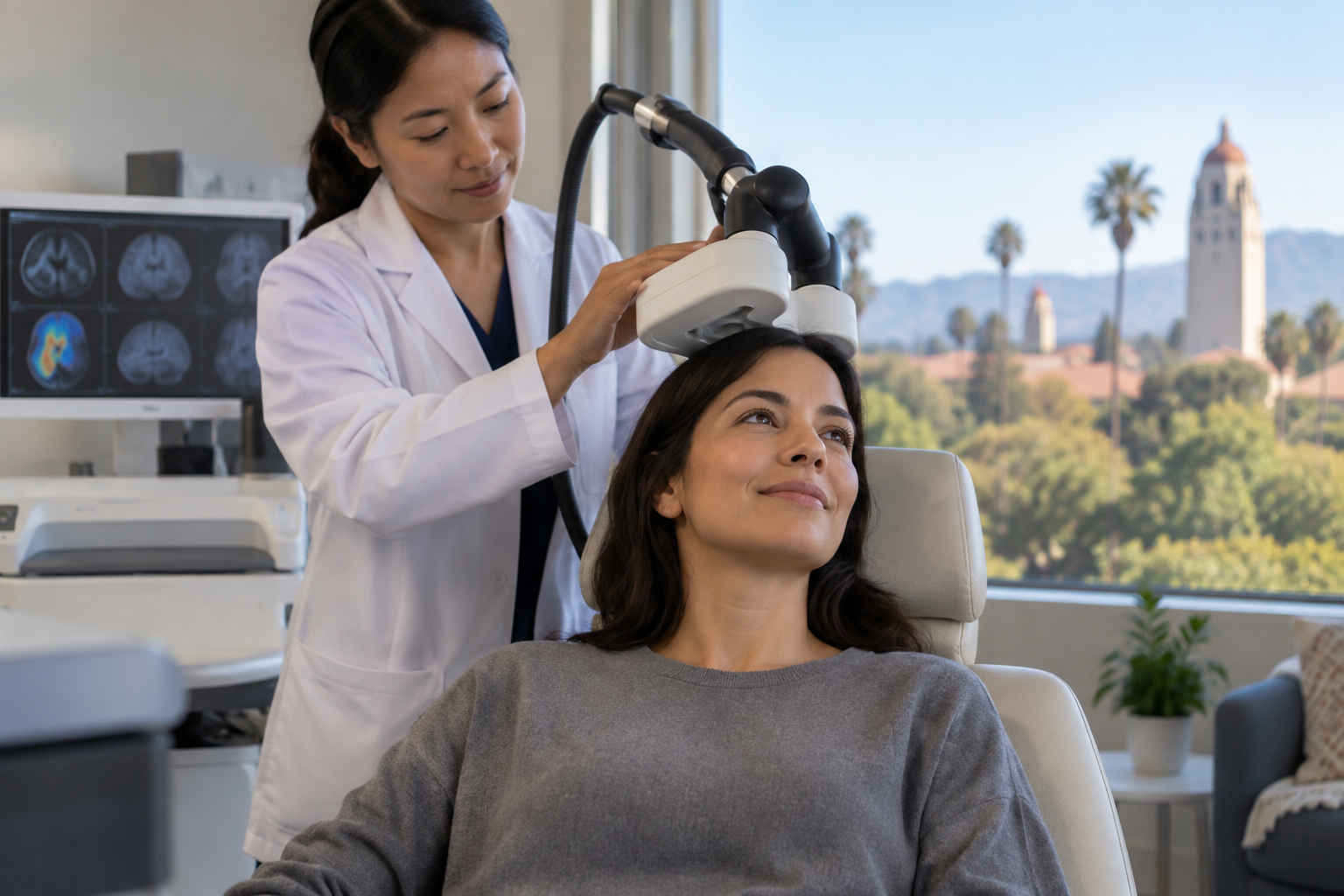
According to Stanford Medicine, SNT uses a magnetic paddle placed on the scalp to deliver gentle electrical pulses. Stanford Medicine says these pulses are intended to reset brain circuits that have gone awry.
Relationship to transcranial magnetic stimulation
Stanford Medicine describes SNT as a next generation of transcranial magnetic stimulation. The source says the developing treatment is successfully treating severe depression in people for whom other approaches have failed.
Stanford Medicine does not describe SNT as a broadly available treatment in the supplied extract. The source presents it as technology under development by its research team.
Early clinical-trial findings
Stanford Medicine reports results from a small, double-blind, randomized clinical trial involving 14 participants. According to the source, nearly 80% of participants went into remission after five days of treatment.
Stanford Medicine also reports that follow-up studies showed similar results. The source says about half of participants remained depression-free four weeks after treatment.
Other conditions under study
Stanford Medicine says the Stanford University Brain Stimulation Lab is refining the technology for several conditions beyond depression. According to Stanford Medicine, these include bipolar disorder, addiction, borderline personality disorder and obsessive-compulsive disorder.
Stanford Medicine identifies Nolan Williams, MD, as the director of the Stanford University Brain Stimulation Lab. The source describes the lab’s work as refining SNT technology for the listed conditions.
What this means for California patients
For Californians looking for treatment locally, this directory lists 382 published clinics in California, while Stanford Medicine’s report describes SNT as a developing approach rather than confirming local availability.
This is general information, not medical advice.
More California reporting on treatment updates.
This report is educational and is not medical advice. Coverage, availability and eligibility can change; verify details with the named source or your care team.